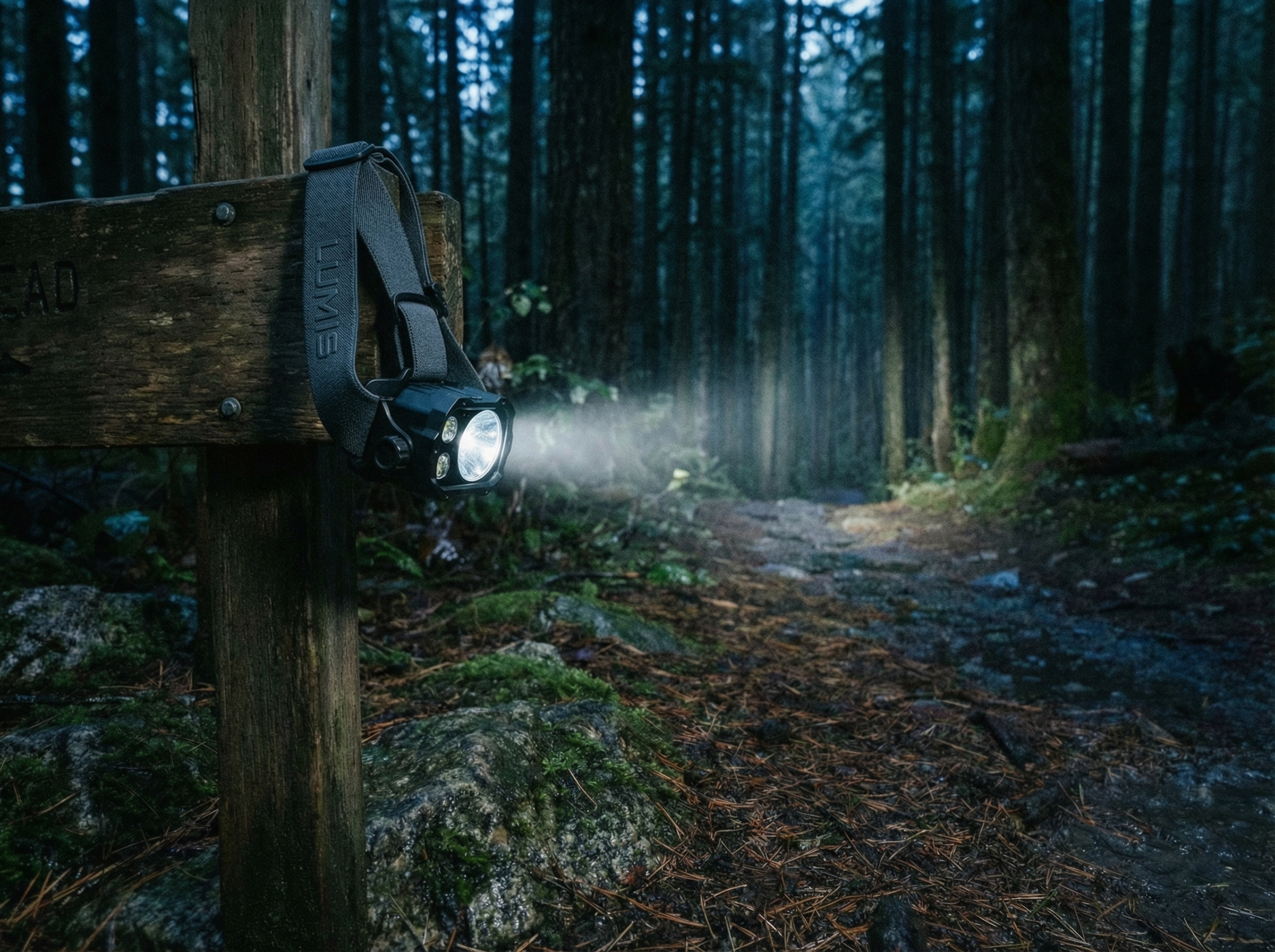
Trailhead — Pre-Dawn Start
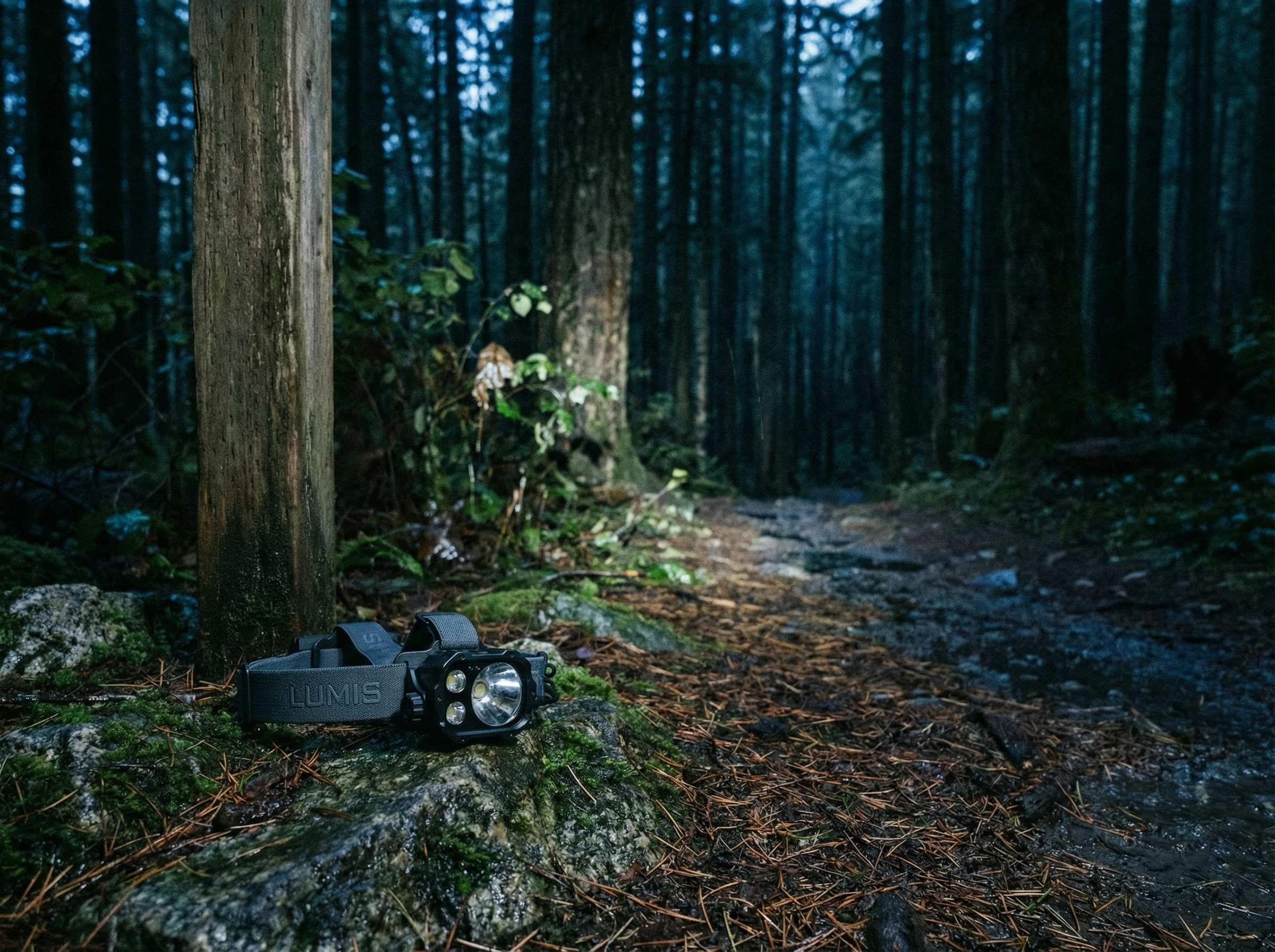
Camp — Last Light
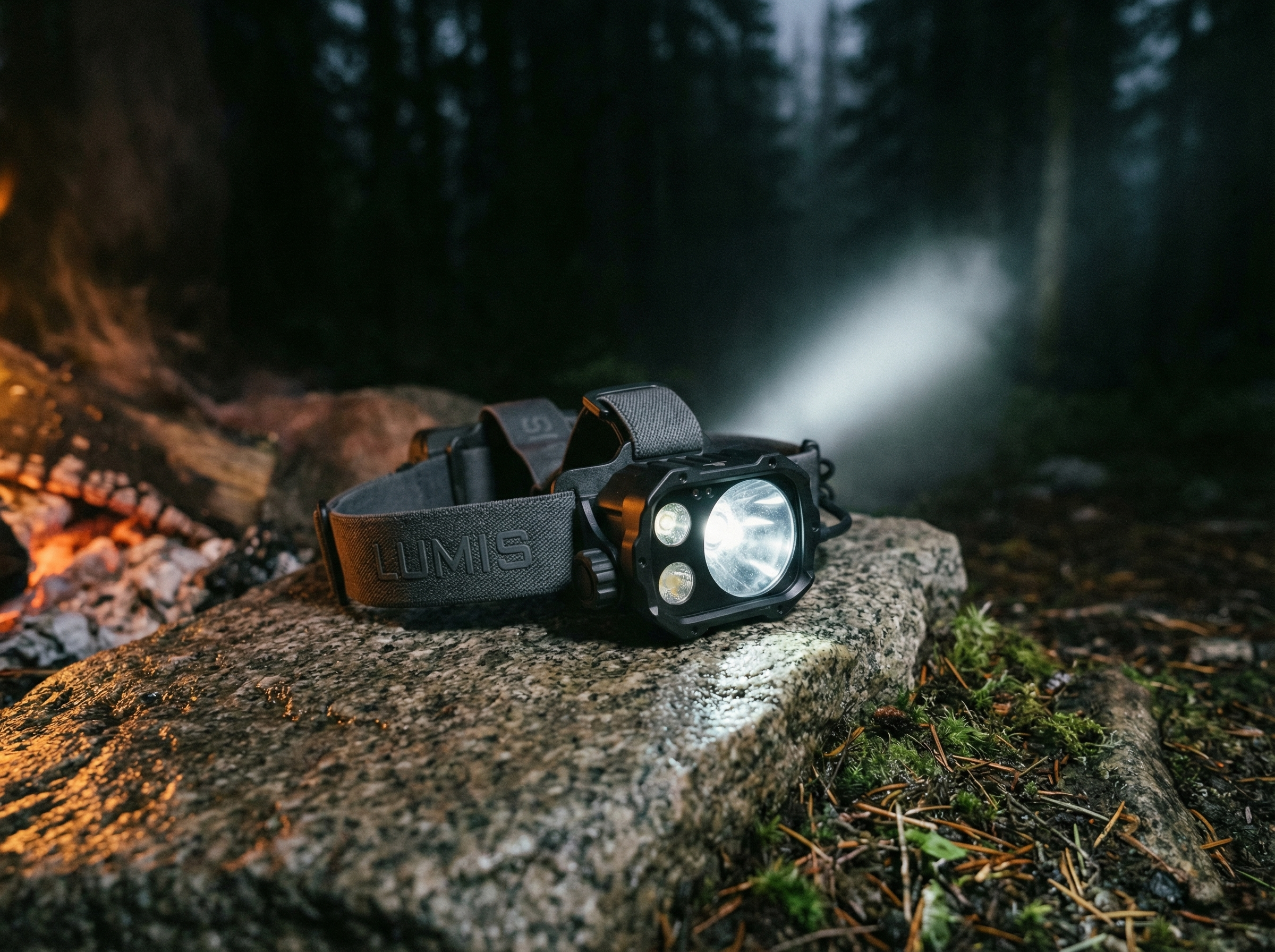
Campfire — Last Light
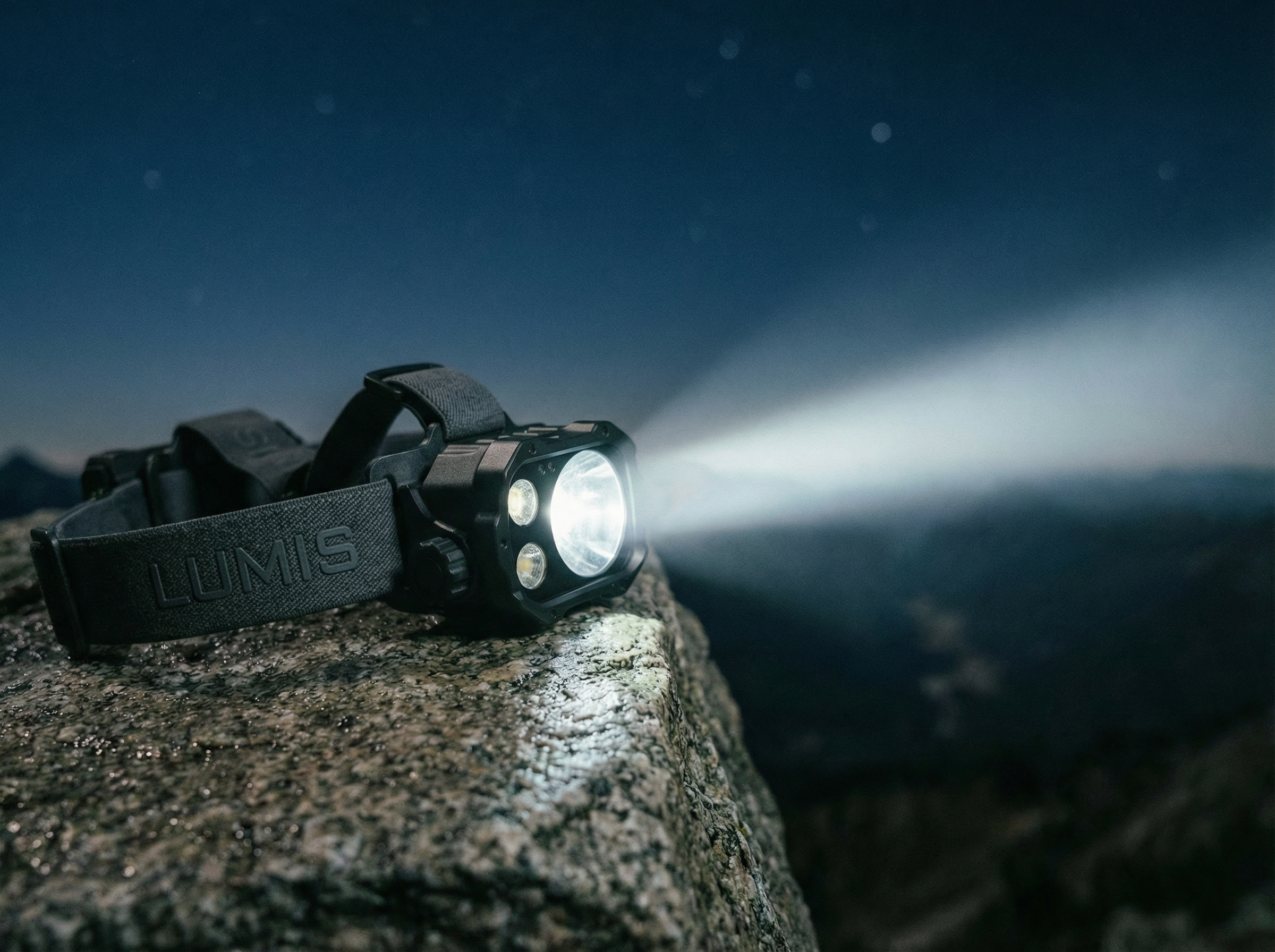
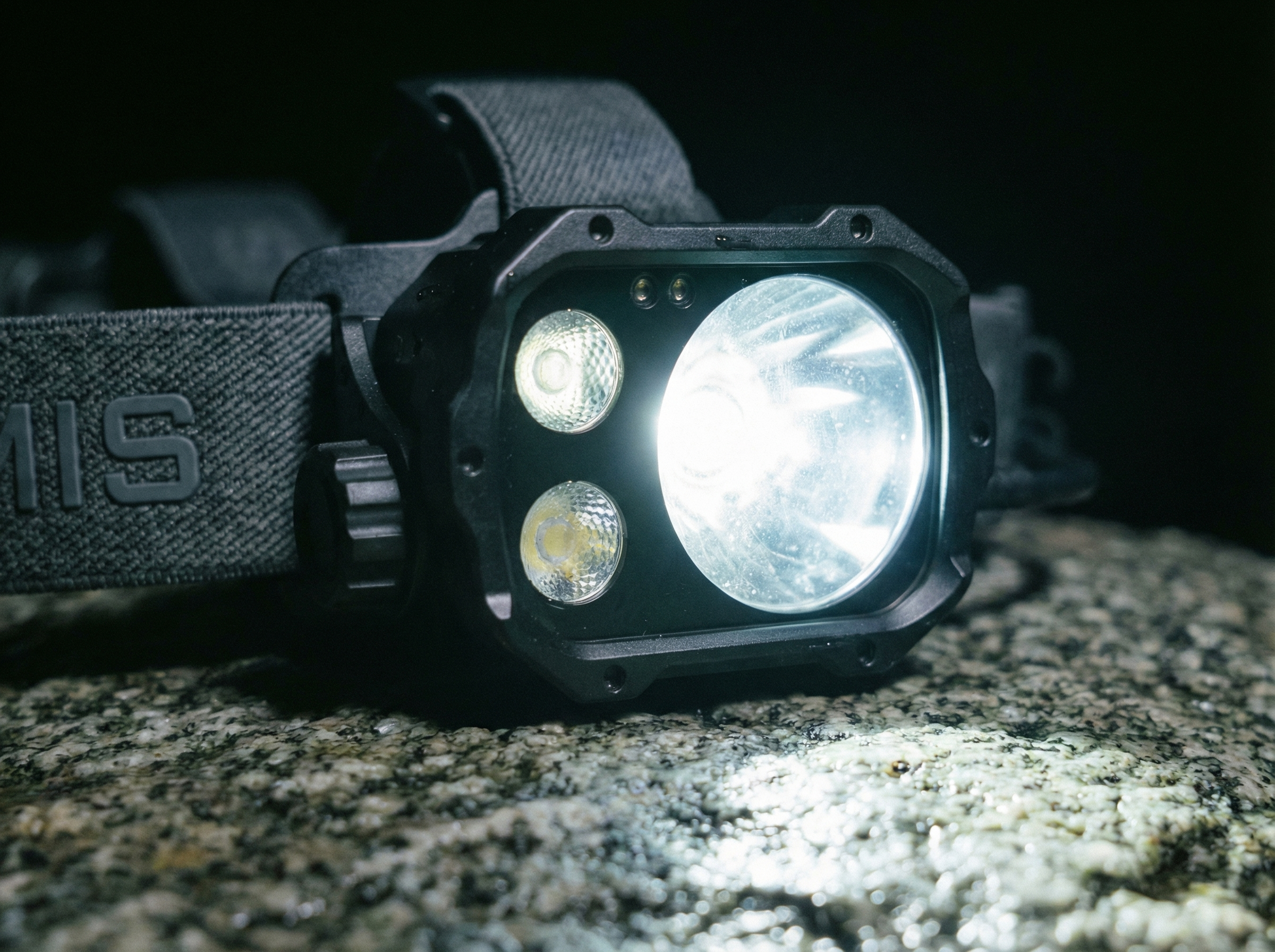
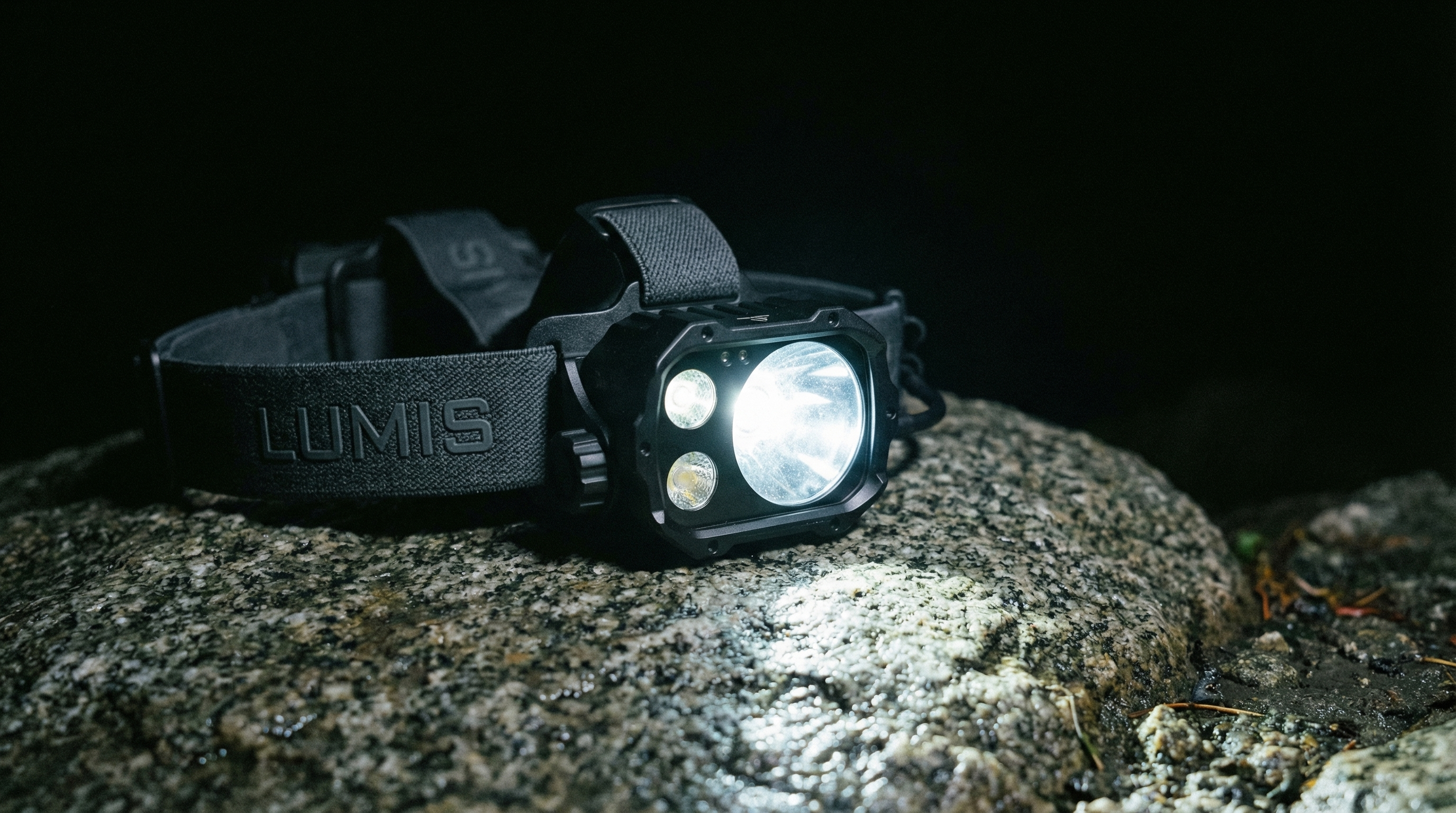
LUMIS is a precision lighting company founded by a SAR team coordinator and a product engineer who spent ten years building industrial lighting systems. Their flagship product, the Nightward, is a 4,000-lumen rechargeable headlamp built around a three-LED array — one XHP70 throw beam flanked by two warm-white flood LEDs. Priced at $249.
Dual 5,000mAh battery packs. 500-hour total runtime across modes. IP66 rated. Charges via USB-C and doubles as a power bank. The Nightward isn't an accessory — it's infrastructure. Built for the people who move when everyone else stops.
The premium headlamp market competes almost entirely on lumen counts, runtime tables, and IP ratings. Every brand speaks the same language. For casual campers, that's enough. For backcountry hunters, SAR operators, and ultralight backpackers — the people who actually push into the dark — spec sheets don't build trust. Experience does.
These are people who have been failed by gear at the worst possible moment. A dead headlamp at 11,000 feet. A flooded battery case in a creek crossing. A beam that washes out in fog and tells you nothing. They carry what has been proven — and they can tell the difference between a brand that understands that and one that doesn't.
LUMIS built the right product. The ask: build a campaign that speaks to the life, not the lumen count.
Most outdoor lighting campaigns frame darkness as something to be overcome — a problem solved by the product. That framing positions the headlamp as a defensive tool. For LUMIS's audience, darkness isn't the enemy. It's the point. The pre-dawn start. The night descent. The 0400 glassing session. These aren't hardships — they're where serious people separate themselves from the weekend crowd.
The Nightward doesn't fight the dark — it gives you ownership of it. The campaign frames darkness as the backcountry hunter's edge, the SAR operator's domain, the ultralight hiker's early start. LUMIS is the tool that makes that ownership total.
Every campaign environment is pre-dawn or after last light. No golden hour. No scenic vistas. The trailhead at 0430. The ridgeline at 2100. The camp setup in complete darkness. This community knows those hours — and they've never seen a headlamp brand live there.
The Nightward appears in use, never on display. Mounted on a helmet during a technical descent. Attached to a pack shoulder strap on a flat approach. The light beam itself becomes a visual element — cutting through dark frames, defining the path forward. The product earns the frame.
The visual direction is defined by darkness as a compositional element — not as negative space, but as the dominant presence in every frame. The Nightward's beam becomes the narrative device. What it illuminates is what matters. What it doesn't is left to inference.
Crushingly dark base exposure. The headlamp beam is the primary — sometimes only — light source. Tungsten warmth from camp fires in supporting frames. Cold blue moonlight on high-altitude terrain.
Heavy film grain. The grain becomes atmospheric in low-light frames — it reads as cold air, as altitude, as the texture of real conditions. Matte black chassis against dark environments. The hardware disappears until the beam fires.
Low angles on terrain. The beam cutting across the frame, not pointing at the viewer. Environments that suggest scale — ridgelines, boulder fields, treelines at altitude. The human figure present but secondary to the light.
Minimal. One line, maximum. Set in cold white against dark frames. "Own the Dark." stands alone — no qualifier, no explanation. The audience understands what it means to be in the field before the world wakes up.
Modeled against Meta creative benchmarks Q4 2025 and comparable identity-driven campaigns in adjacent verticals — premium knife brands, backcountry apparel, and tactical outdoor gear with a serious-use audience.
Tell us about your product. We'll tell you exactly how we'd make it impossible to scroll past.